Choosing the best waterproofing solution for your garage floor depends on several property-specific factors, including moisture exposure, usage, substrate condition, and long-term expectations. Below is a clear, decision-oriented breakdown to help you determine the most appropriate option for your property.
Key Factors That Determine the Best System in Waterproofing Garage Floor
Before selecting a system, assess the following:
- Moisture source: Ground moisture, surface water, flooding, or rising damp
- Garage usage: Parking only, workshop, storage, or high traffic
- Existing floor condition: Cracks, oil contamination, uneven concrete
- Climate exposure: Humidity, rainfall, temperature fluctuations
- Budget vs lifespan expectations
Comparison of the Most Effective Waterproof Garage Floor Systems
1. Epoxy Sealing of Garage Floors
Best for: Waterproofing residential garages with light to moderate moisture exposure
Pros
 Seamless, non-porous finish
- Strong water resistance
- Easy to clean and maintain
- Cost-effective
Cons
- Not suitable for high hydrostatic pressure
- Can fail if moisture vapour transmission is not addressed
- Less flexible than other systems
Recommended if:
Your garage is mostly dry, has no active leaks, and you want a durable, affordable waterproof surface.
2. Polyurethane (PU) Waterproofing
Best for: Waterproofing garage floor with moisture movement, minor cracking, or temperature changes
Pros
- Highly flexible and crack-bridging
- Excellent waterproofing performance
- Handles substrate movement better than epoxy
- UV-stable options available
Cons
- Higher upfront cost
- Requires professional installation for best results
Recommended if:
Your garage floor experiences moisture ingress, minor slab movement, or you want a longer-lasting waterproof solution.
3. Cementitious Garage and Driveway Waterproofing Systems
Best for: Waterproofing garage floors affected by rising damp or moisture from below
Pros
- Penetrates concrete and blocks moisture internally
- Breathable system
- Suitable for negative-side waterproofing
Cons
- Not decorative
- Often requires a topcoat for durability
Recommended if:
Your property suffers from ground moisture or rising damp that cannot be stopped from the exterior.
4. Sheet or Membrane-Based Garage Floor Waterproofing
Best for: Severe water ingress or flood-prone properties
Pros
- High-performance waterproof barrier
- Suitable for extreme conditions
Cons
- High cost
- Complex installation
- Typically requires overlay finishes
Recommended if:
Your garage is below ground level or regularly exposed to flooding or high hydrostatic pressure.
Quick Recommendation by Property Type
- Standard residential garage → Epoxy or polyurethane
- Older home with rising damp → Cementitious system + protective coating
- High-moisture or flood-prone area → Polyurethane or membrane system
- Workshop or heavy-use garage → Polyurethane with high-build topcoat
Waterproofing Methods We Use for Garage Floors
- Floor Sealing: A protective layer is applied to the concrete surface. It acts as a barrier against moisture, stains, chemicals, and wear. It enhances durability and appearance of garage floors.
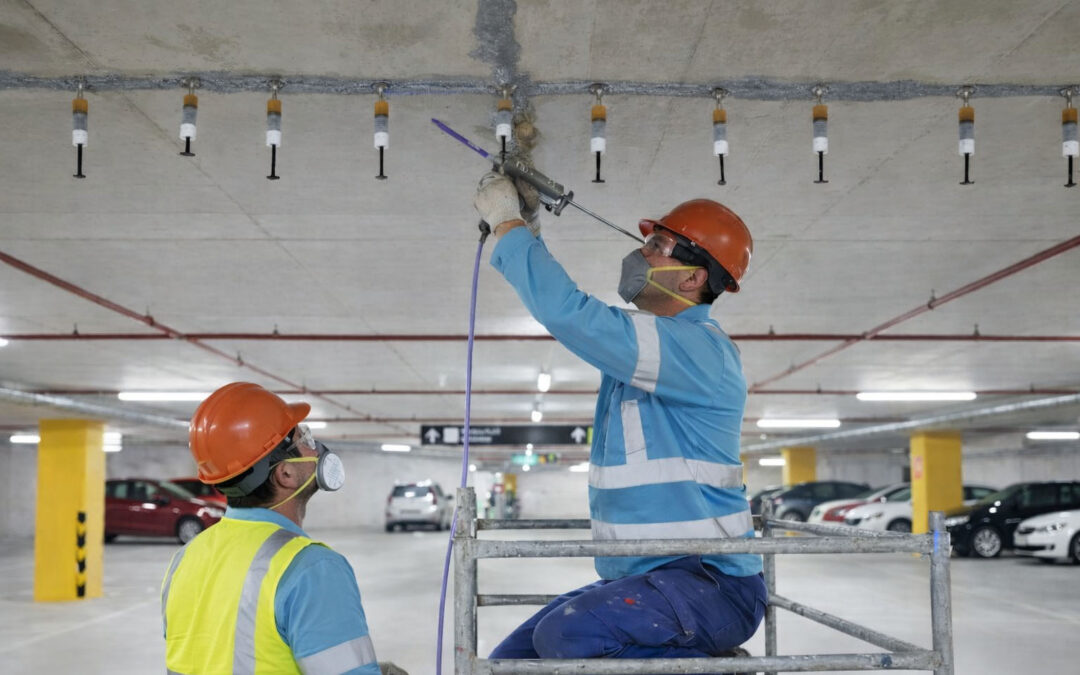
- Concrete Crack Injection: Epoxy or polyurethane resins injected into cracks to prevents water seepage through damaged slab areas.
- Joint Sealing: Flexible sealants applied to expansion joints and slab edges. It stops water entry at perimeter transitions.
- Membrane Systems (where required): Liquid-applied for high-moisture environments. Provides long-term waterproofing under coatings.
Professional Assessment Matters
No waterproof garage floor system will perform correctly without:
- Moisture testing (vapour emission and hydrostatic pressure)
- Proper surface preparation
- System compatibility with your slab condition
A professional assessment ensures the waterproofing solution selected will perform long-term, not just look good initially.