The ways to fix concrete cracks are not all the same, and neither are the cracks themselves. The type, size, cause, and environment of a crack determine how to fix it. Choosing the right method will keep the results for a long time and stop damage from happening again.
By matching materials and methods to the type of crack and the conditions, you can make sure that the repair is safe, doesn’t cause water damage, saves money, and lasts a long time. There are many ways to fix cracks, and each one works best for a certain type of concrete crack repair, how bad it is, and what the structure needs.
- Epoxy Injection Crack Repair – is a structural method that injects low-viscosity epoxy resin into concrete cracks, bonding fractured sections, restoring original strength, and preventing further damage by creating a permanent, rigid seal.
- Used for structural cracks
- Injects epoxy resin under pressure to bond and restore concrete integrity
- Ideal for foundations, beams, and slabs
- Polyurethane Injection Crack Repair: is a specialized method used to seal and waterproof cracks in concrete structures. It involves injecting a liquid polyurethane resin into the crack under pressure.
- Used for non-structural, leaking cracks
- Expands to seal cracks and block water ingress
- Common in basements, tunnels, and retaining walls
- Grouting Injection Crack Repair is a concrete crack repair method where a fluid grout material (cementitious, chemical, or resin-based) is injected under pressure into cracks, voids, or gaps in concrete or masonry structures.
- Fills cracks with cementitious or chemical grout
- Suitable for large or deep cracks
- Often used in infrastructure and dam repairs
- Stitching injection is a structural repair technique used to stabilize and reinforce cracked concrete or masonry. It’s especially effective for non-moving cracks that need long-term strength and durability.
- Involves drilling holes and inserting steel staples across the crack
- Reinforces and holds the crack together
- Used in masonry and concrete walls
- Routing and Sealing concrete cracks and joints is a crack repair method where cracks are widened, cleaned, and filled with flexible sealant to prevent water, debris, and chemical intrusion, protecting concrete from further deterioration. In rout and seal concrete crack process,
- cracks are widened and filled with sealant
- It is best for surface-level, non-structural cracks
- common in pavements and slabs of industrial yard and warehouses
- Saw Cut Concrete Cracks and Joints – (New Construction) Saw cut crack sealing involves filling and protecting cracks that develop in concrete slabs along control joints. By sealing these cracks with flexible, durable materials, we prevent water, debris, and chemical intrusion, reduce further deterioration, and extend the lifespan of the pavement or floor surface.
- Reinforcement Addition
- Adds steel bars or mesh to strengthen cracked areas
- Used when cracks threaten structural stability
- Overlay or Surface Treatment
Choosing the Right Crack Repair Method (Infographic)
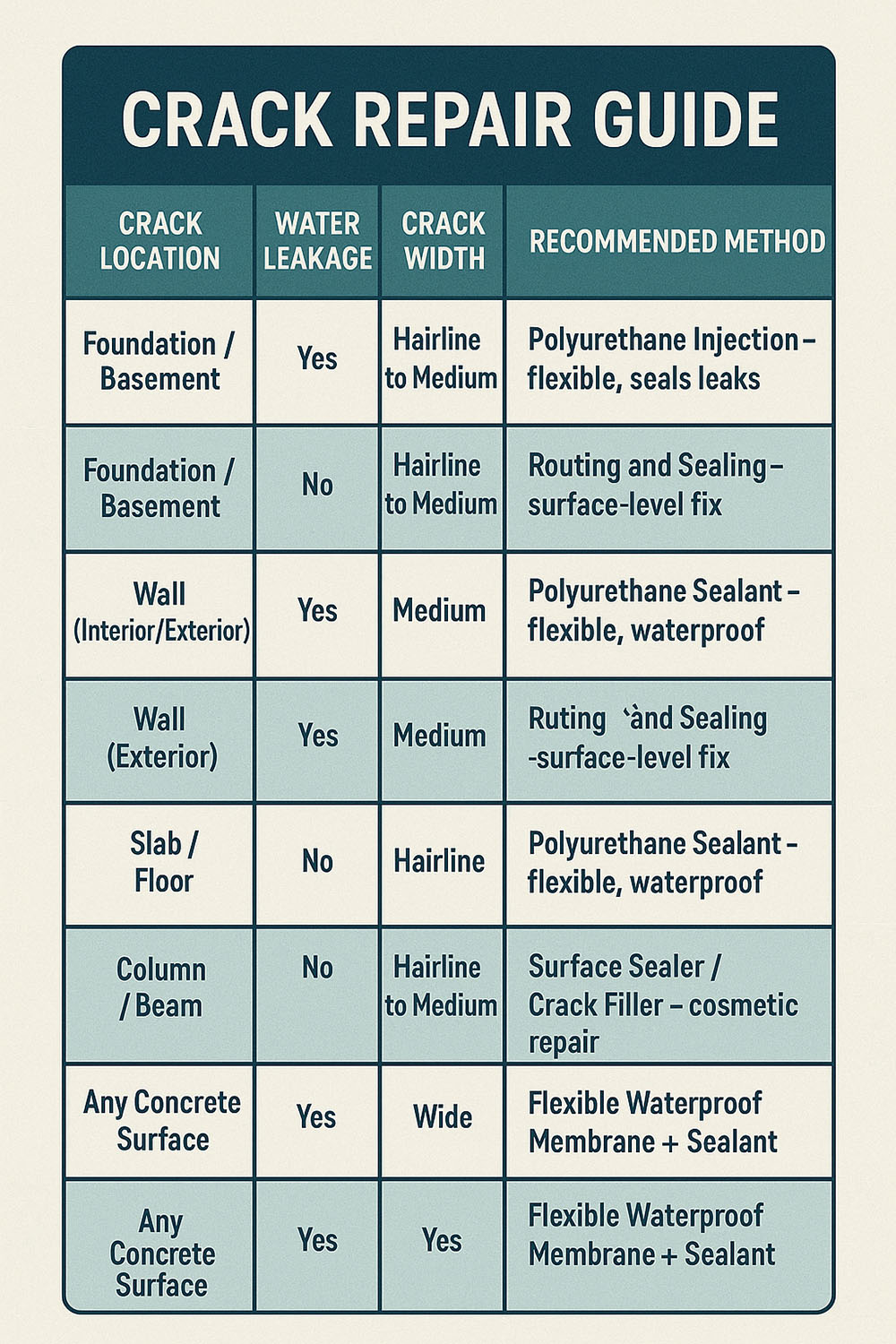
Choosing the Right Crack Repair Technique: A Guide for Property
*Click the image to download.
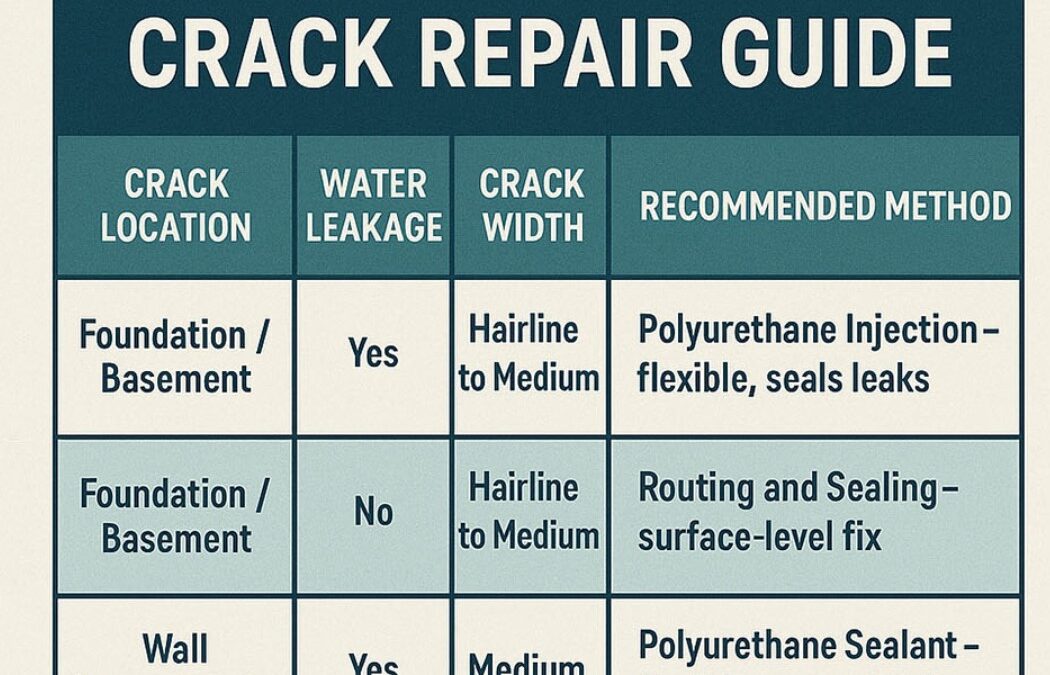
🛠️ Choosing the Right Crack Repair Method (Table)
| Crack Location | Water Leakage | Crack Width | Movement | Structural Role | Recommended Method |
|---|---|---|---|---|---|
| Foundation / Basement | Yes | Hairline to Medium | Yes or Not Sure | Load-bearing | Polyurethane Injection – flexible, seals leaks |
| Foundation / Basement | No | Hairline to Medium | No | Load-bearing | Epoxy Injection – strong, structural bonding |
| Wall (Interior/Exterior) | No | Medium to Wide | No | Non-structural | Routing and Sealing – surface-level fix |
| Wall (Exterior) | Yes | Medium | Yes | Non-structural | Polyurethane Sealant – flexible, waterproof |
| Slab / Floor | No | Hairline | No | Non-structural | Surface Sealer / Crack Filler – cosmetic repair |
| Column / Beam | No | Hairline to Medium | No | Load-bearing | Epoxy Injection – restores structural integrity |
| Any Concrete Surface | Yes | Wide | Yes | Varies | Flexible Waterproof Membrane + Sealant |
Quick Summary:
- Epoxy injection → For strength & structural integrity.
- Polyurethane injection → For waterproofing & flexibility.
- Sealants & patching → For cosmetic or minor cracks.
- Combination methods → For wide, active, or complex cracks.
Sometimes, cracks are a sign of a more serious problem, like structural stress or foundation movement. Seeking assistance from a licensed waterproofing company such as Superior Waterproofing guarantees that the appropriate repair technique is selected and avoids future issues. Don’t worry; we offer professional, truthful, and free quotes and recommendations..
Related topics:
- Concrete Crack Injection and Other Crack Repair Methods
- The Ultimate Guide to Epoxy Concrete Crack Injection
- Concrete Crack Injection and Other Crack Repair Methods
- The Basics of Floor Sealing: Everything You Need to Know
- Joint Sealing: Its Importance in Construction and Maintenance